Irrigation Wells & Well Services in Charleston, SC
Limestone aquifers, saltwater intrusion and sulfur — the Lowcountry drills nothing like the rest of the state.
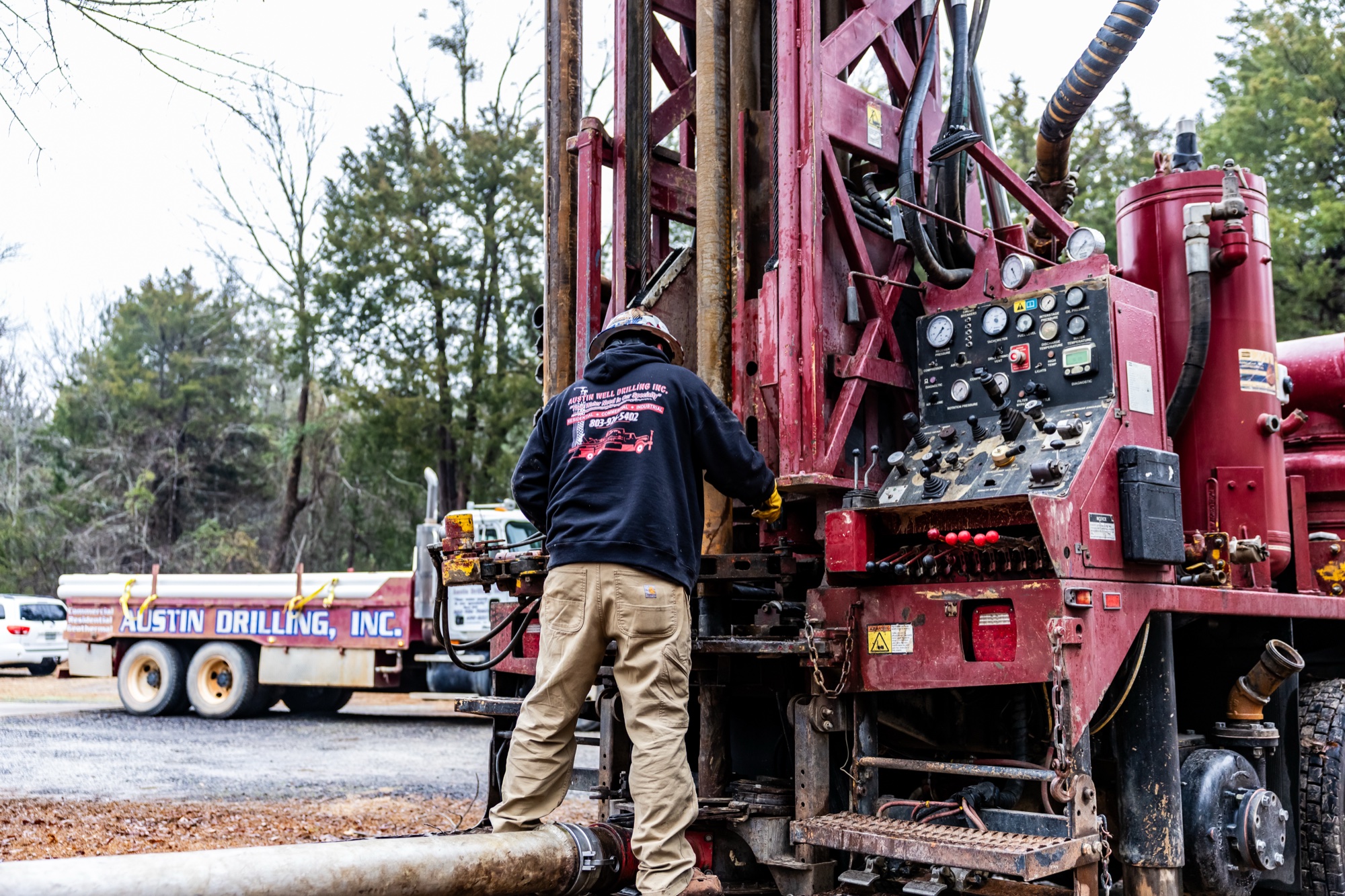
Charleston County Well Service
Charleston Groundwater Is the Most Difficult in South Carolina.
It is worth being direct about this. Charleston County has the least straightforward groundwater in the state, and anyone telling you otherwise is selling something. The reasons are geological and they are not fixable by drilling harder.
Beneath the Lowcountry, the principal deep aquifer is the Floridan — limestone rather than sand. Limestone is calcium carbonate and it dissolves into the water passing through it, which makes Floridan water hard, frequently high in sulfates and very often carrying a pronounced hydrogen sulfide smell. Above it, the shallow surficial aquifer near the coast is commonly brackish, and in places genuinely saline. Between those two problems, the window for good water is narrower here than anywhere else we work.
Saltwater intrusion is the constraint that shapes everything. Sustained pumping near the coast can draw the interface between fresh and salt water inland and upward, and a well that is fine today can degrade over years if the local withdrawal picture changes. This is precisely why Charleston, Berkeley and Dorchester counties sit within a designated groundwater capacity use area, with state permitting for withdrawals above a set threshold. Household and typical residential irrigation wells fall below it; larger commercial and community systems do not.
Practically, then: almost all of Charleston is on public water and should stay that way for drinking. What we drill here is irrigation — and even that needs a deliberate conversation about depth, expected chemistry and whether treatment will be required. We would rather have that conversation honestly up front than hand over a well that disappoints.
Charleston Well Conditions
What to Expect When You Drill in Charleston
The Lowcountry is the hardest groundwater setting in the state. These are the realities rather than the optimistic version.
Ranges reflect typical conditions across Charleston County. Individual properties vary — we assess your specific site before quoting.
Charleston, SC Services
Irrigation & Well Services in Charleston County
Well Drilling
Irrigation wells with depth chosen deliberately to isolate brackish zones. Honest expectations set first.
Learn More →
Well Repair
Existing wells with degrading water quality — often a depth or casing problem rather than a pump one.
Learn More →
Pump Services
Pump replacement and sizing for irrigation systems on Lowcountry property.
Learn More →
Water Treatment
Hardness and hydrogen sulfide are near-standard from Floridan water. Testing establishes the scale.
Learn More →
Irrigation Wells
The main work we do in Charleston County — landscape and garden supply for larger lots.
Learn More →
Septic Installation
Septic installation on rural Charleston County parcels beyond the sewer network.
Learn More →
Common Questions
Charleston, SC Well FAQ
Serving Charleston, West Ashley, Johns Island & the Lowcountry
Honest expectations before any drilling. Call for an assessment of what your site can realistically give.